Global vaccine passport push accelerates as WHO partners with Singapore firm tied to Pfizer and Bill Gates
03/31/2026 / By Lance D Johnson

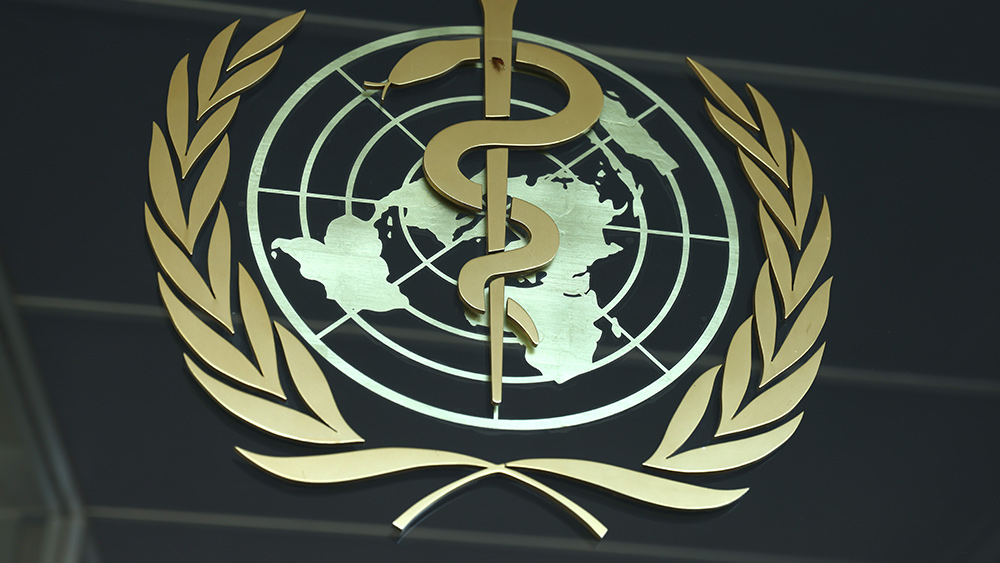
In a move that solidifies a permanent global surveillance infrastructure under the guise of public health, the World Health Organization is advancing its most ambitious digital control scheme yet. Partnering with a Singaporean investment firm with deep financial ties to pharmaceutical giants and Bill Gates, the WHO is launching a three-year initiative to replace paper health records with “interoperable digital health wallets,” beginning in Southeast Asia.
This program, framed as a benign tool for continuity of care, represents the next critical step in establishing a globally standardized, digitally-enforced vaccine passport system—a goal explicitly outlined in the WHO’s amended International Health Regulations. The initiative, built on pandemic-era tracking tools, is a direct escalation of the “infodemic” management playbook, where dissent is silenced as misinformation and global health policy is shaped by the very investors who profit from it.
Key points:
- The WHO has partnered with Singapore’s Temasek Foundation to pilot digital health wallets across Southeast Asia, intended for eventual global adoption.
- The system builds on COVID-19 digital certificate infrastructure and is mandated by the WHO’s International Health Regulations (2025).
- Temasek has a significant investment history in vaccine developers like BioNTech (Pfizer’s partner) and is connected to networks funded by the Gates Foundation.
- The system will evolve beyond vaccination records to encompass broad personal health data, enabling unprecedented surveillance and control.
- The push aligns with a broader ecosystem of initiatives aimed at countering “misinformation” by centralizing health narrative control.
The digital panopticon gets a wallet
The WHO’s latest announcement, a departmental update dated March 23, 2026, describes a partnership with the Temasek Foundation and the Alliance for Health Policy and Systems Research. The aim is to help ASEAN nations transition from paper-based records like the traditional “Yellow Card” to “secure, interoperable digital health wallets (DHWs).” WHO director Dr. Alain Labrique calls this “a commitment to building trusted, people-centred health systems.” However, the trust appears to be placed in a system of “cryptographic verification” via the WHO’s Global Digital Health Certification Network (GDHCN), ensuring records are “secure, trustworthy and interoperable.”
This technical language masks the profound shift in power. The program explicitly aligns with the WHO’s International Health Regulations (IHR) amendments, which took effect in 2025 and call for “globally recognized digital health certificates.” As journalist James Roguski has warned, these regulatory changes are the legal bedrock for mandating health credentials for international travel. The initiative is not a mere “technological upgrade,” but the operationalization of a global framework where health status, verified by a centralized digital authority, could become a prerequisite for participation in society.
Follow the money: Gates, Pharma, and the silencing of dissent
A closer examination of the partner, Temasek, reveals why this initiative raises acute concerns about governance and bias. Temasek is a Singapore government-owned investment firm that participated in a $250 million investment in BioNTech in 2020, prior to its COVID-19 vaccine development with Pfizer. Its portfolio is a who’s who of the pharmaceutical and digital health ecosystem, including mRNA firms like Abogen Biosciences, Clover Biopharmaceuticals, and clinical research giant Novotech.
Furthermore, Temasek is enmeshed in networks heavily funded by Bill Gates, a primary architect of the global vaccine passport agenda. The firm has collaborated with Gavi, the Vaccine Alliance, which was co-founded and heavily funded by the Gates Foundation. It is also involved in initiatives like the Good Health Pass Collaborative, which has ties to the ID2020 Alliance—a digital identity project also backed by Gates funding.
This creates an insurmountable conflict of interest. The same entities funding and profiting from vaccine technologies are now building the digital infrastructure to track compliance and mandate their products globally. This mirrors the biases seen in the WHO infodemic response initiative, which critics say leads to a “narrow view of science” and “preferential consideration of drug and vaccine-based health technologies.” It also echoes the U.S. Food and Drug Administration Rumour Control effort, which, with its “clear revolving door with Big Food and Big Pharma,” routinely dismisses evidence for natural products as “misinformation.”
The digital passport push is the enforcement arm of a broader censorship industrial complex. Organizations like the Center for Countering Digital Hate and the Trusted News Initiative act as arbiters of “dangerous” content, silencing dissenting medical voices—exemplified by the “Disinformation Dozen” report—while media-academic projects like Brown University’s Information Futures Lab promote “prebunking” to “inoculate” the public against wrong-think. The WHO’s digital wallet provides the technical means to render any individual who refuses approved medical interventions a verifiable non-compliant, potentially locking them out of travel, commerce, and services.
The pilot in Southeast Asia is the testing ground. The stated goal is to produce a “replicable model for other countries.” With the United States having withdrawn from the WHO, the global governance of this system falls even more under the influence of unelected partners and wealthy foundations. The digital health wallet is being sold as a tool for promoting health equity and ensuring safety. In reality, it is the key component in a new global architecture of control, where health autonomy is surrendered to a network built and funded by those who stand to gain from its adoption, while they perpetuate human suffering and exploit our psychology and freedoms.
Sources include:
Apps.Who.in [PDF]
Submit a correction >>
Tagged Under:
ASEAN, Big Pharma, bill gates, BioNTech, Censorship, conflict of interest, digital certificate, digital health wallet, digital identity, global governance, globalists, health surveillance, International health regulations, medical freedom, misinformation, Pfizer, privacy, surveillance, Temasek, vaccine passport, WHO
This article may contain statements that reflect the opinion of the author
RECENT NEWS & ARTICLES